PITT OHIO’s Harrisburg Terminal: Jumpstarting Pennsylvania’s Electric Truck Future
Overview
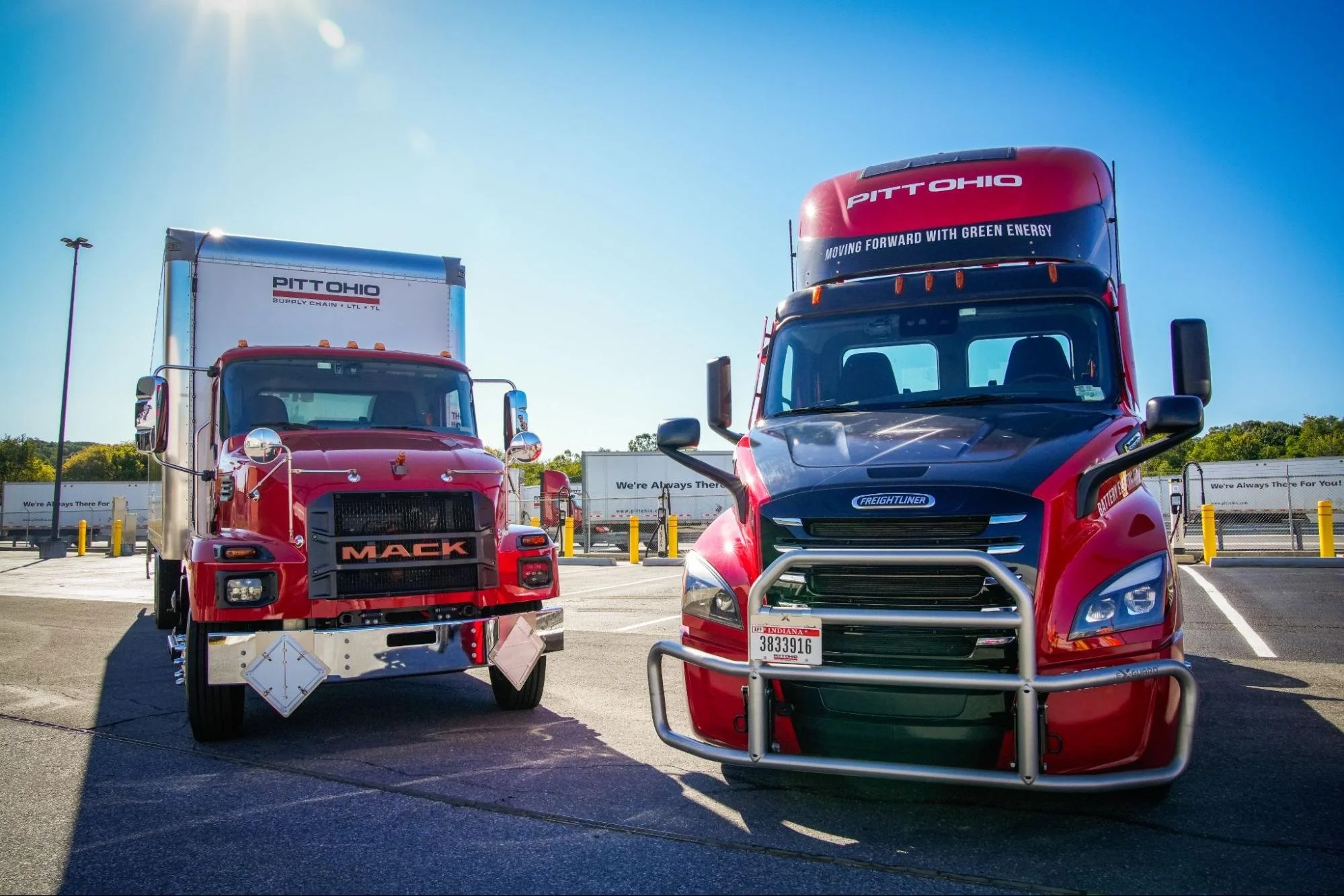
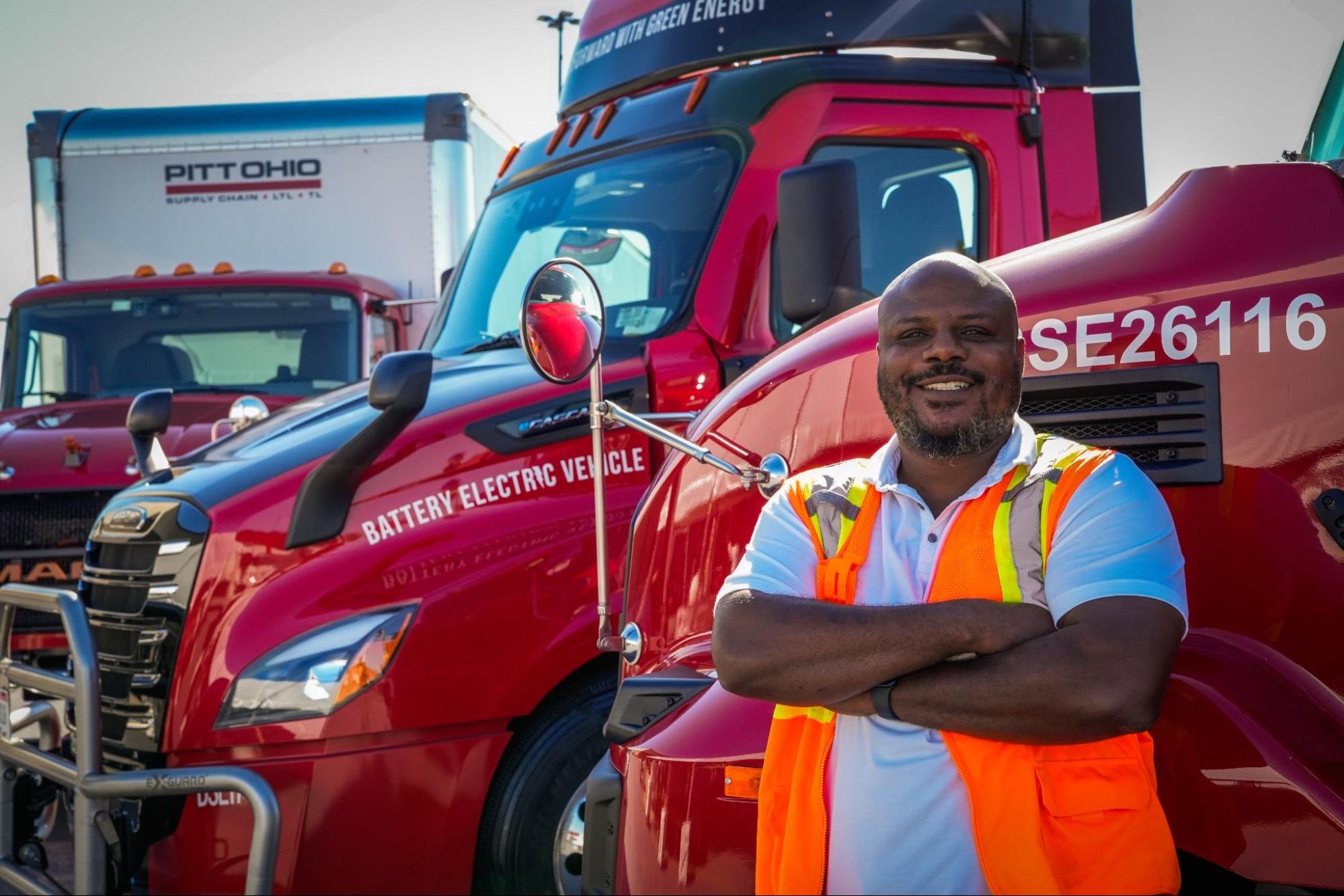
In summer 2025, the rumble of diesel engines at PITT OHIO's Harrisburg terminal gave way to something different: the quiet hum of electric trucks moving freight. For a Pennsylvania-based carrier that has logged more than a billion miles over four decades, it marked a turning point.
PITT OHIO's journey began with three trucks and a one-door warehouse in Pittsburgh. Over 40 years, the company grew into a regional logistics powerhouse spanning the Midwest, Mid-Atlantic, and Northeast. But growth alone was never the mission. Sustainability has been embedded in PITT OHIO's operations from the start. The company has consistently invested in fuel-efficient technologies and emissions reduction long before "green logistics" became an industry priority.
As electric vehicle adoption accelerated across the transportation sector, PITT OHIO leadership saw an opportunity to move beyond incremental improvements. The question wasn't whether to electrify, but where and how to prove it could work at commercial scale.
The answer was Harrisburg, one of PITT OHIO's largest and most strategically positioned terminals. With high daily freight volume, diverse delivery routes, and existing infrastructure that could support expansion, Harrisburg became the proving ground for comprehensive terminal electrification. If electric freight operations could succeed here, they could succeed anywhere in PITT OHIO's network.
The Challenge
Electrifying a major freight terminal isn't a matter of swapping vehicles. It requires reimagining power infrastructure, operational workflows, and financial models – all while maintaining 24/7 freight operations. PITT OHIO faced three fundamental obstacles:
Infrastructure Gap: The Harrisburg terminal's existing electrical service couldn't support commercial-grade EV charging. Even a small fleet of electric trucks would overload the system. Before a single vehicle could operate reliably, the site needed substantial electrical upgrades: expanded service capacity, underground conduit, transformers, and charging stations capable of handling medium- and heavy-duty vehicles.
Financial Uncertainty: The upfront capital requirements were substantial: chargers, grid enhancements, vehicles, backup systems. Without comparable projects to benchmark against, the return on investment remained uncertain. Would fuel savings offset the investment? How quickly? What if the technology didn't perform as promised?
Operational Complexity: Every operational assumption had to be reconsidered. Which routes could electric trucks handle? How do you schedule charging without disrupting delivery schedules? What happens when vehicles return at the same time and demand spikes? With few real-world examples of electrified freight terminals in operation, PITT OHIO was entering uncharted territory.
To succeed, PITT OHIO needed strategic partners, substantial infrastructure investment, and the resolve to pioneer solutions for an entire industry. Rather than wait for proven models or perfect conditions, the company decided to create both.
The Solution
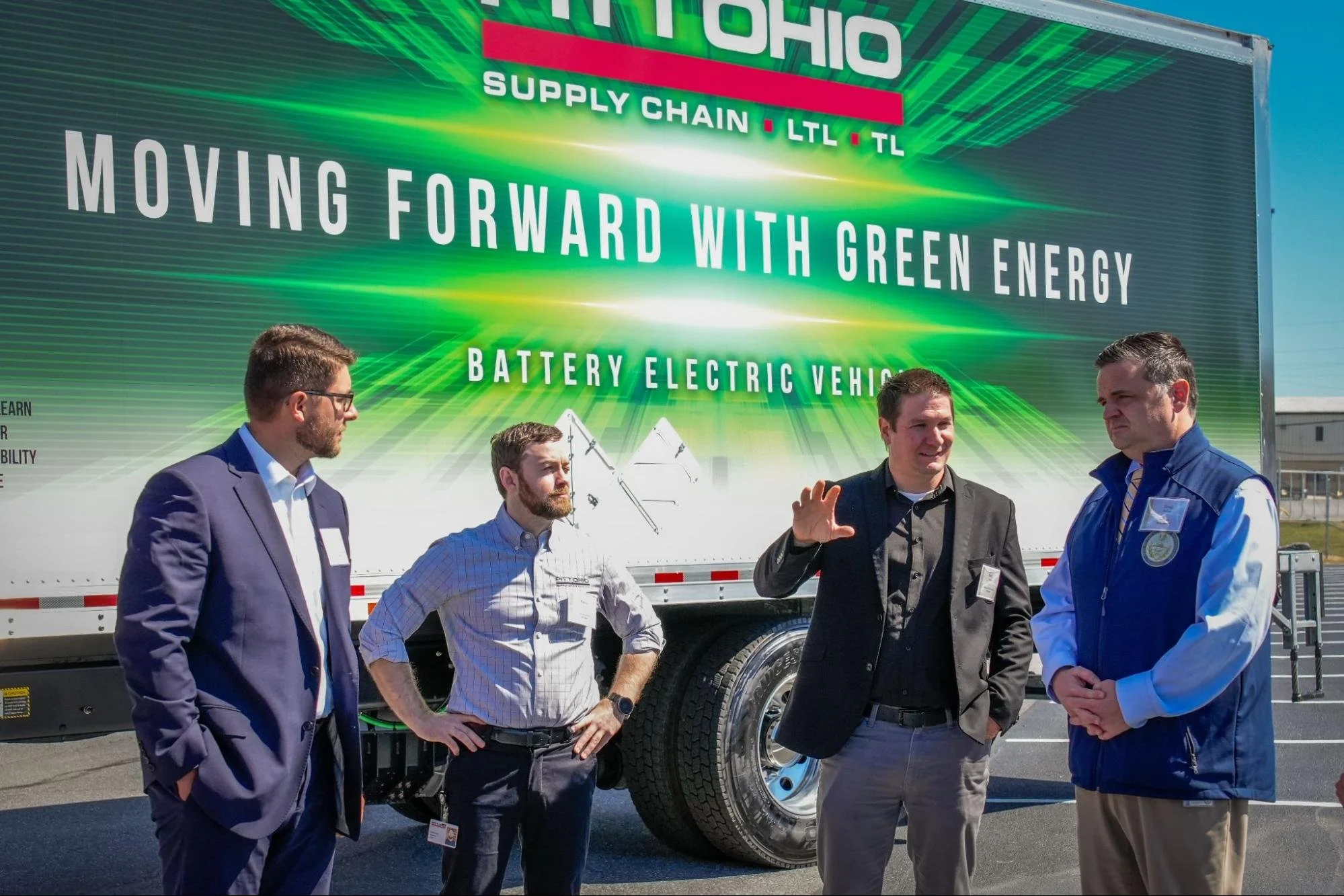
PITT OHIO knew they couldn't do this alone. Electrifying a major freight terminal required expertise, capital, and coordination across multiple organizations. The company assembled a coalition: the Pennsylvania Department of Environmental Protection's Driving PA Forward program brought funding and regulatory support, while PPL Electric Utilities provided the grid expertise to make it all possible.
Project Timeline: Planning began in late 2023, with infrastructure construction throughout 2024 and fleet deployment starting July 2025.
Rebuilding the Infrastructure: Harrisburg's 400-amp electrical service couldn't support commercial EV charging. Engineers from PITT OHIO and PPL Electric designed a complete overhaul: 7,200 feet of underground conduit, five transformers, and 2,000-amp service – a fivefold increase built to support double the planned fleet. Smart energy management systems optimized charging schedules, shifting load to off-peak hours and cutting demand charges by 30%.
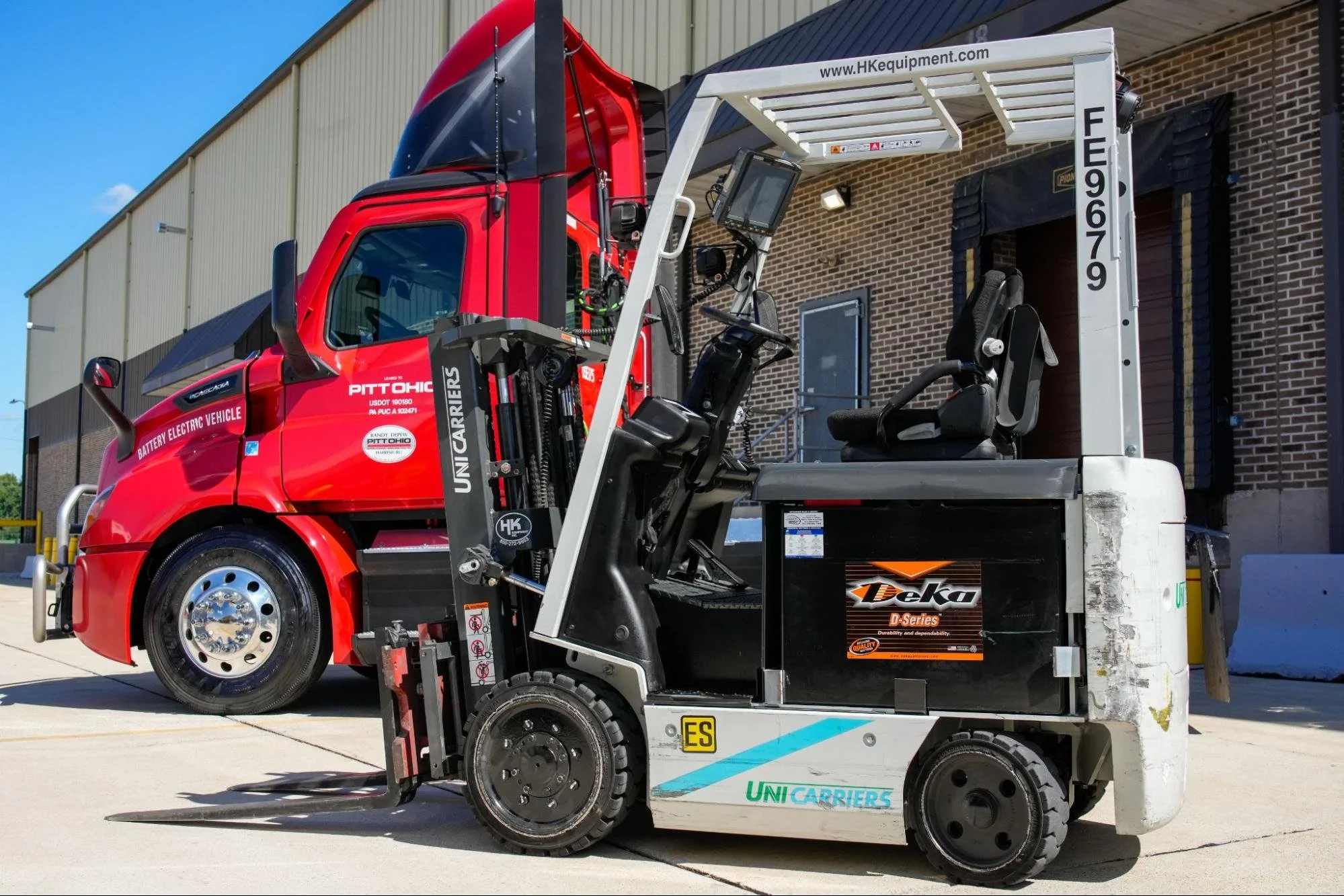
PITT OHIO installed eight DC fast chargers (up to 150 kW) for medium- and heavy-duty trucks, plus Level 2 chargers for electric forklifts. The intelligent software coordinates charging with dispatch operations in real time.
Strategic Fleet Integration: PITT OHIO started with Class 6 and Class 7 electric trucks on strategically selected routes: predictable 50-150-mile daily runs, multiple stops, and return-to-base operations. "The drivers love the feel and quietness of the vehicles. They really embraced it," says Jason Miller, Harrisburg Terminal Manager. Inside the terminal, electric forklifts eliminated diesel fumes and noise entirely.
The Partnership Advantage: Engaging PPL Electric 18 months early proved critical. Utility interconnection typically delays projects by a year or more. Early collaboration on load planning and grid coordination eliminated bottlenecks and created a replicable model for other fleets pursuing electrification.
Project Snapshot
7,200 feet of underground conduit
2,000-amp electrical service (5x increase)
8 DC fast chargers for trucks
5 transformers installed
1-megawatt backup generator
2,200-gallon diesel fuel tank offset
The Results
Within the first few months of operation, the electrified fleet at Harrisburg began delivering measurable impact. Between July and October 2025, the trucks logged more than 31,000 miles and consumed about 58 megawatt-hours of electricity, replacing nearly 5,000 gallons of diesel fuel. That shift prevented an estimated 47 metric tons of carbon emissions – equivalent to taking ten passenger cars off the road for a year – while saving roughly $12,000 in net fuel costs. Over a full year, those savings are expected to multiply, proving that sustainability and operational efficiency can move forward together.
By the Numbers (July–October 2025)
31,731 miles driven by electric trucks
58 MWh of clean electricity used
~5,000 gallons of diesel fuel displaced
47 metric tons of CO₂ avoided
$12,000 in net fuel savings
Up to $50,000 projected annual savings
Source: PITT OHIO Harrisburg Terminal Fuel and Energy Usage Report (2025)
The terminal now supports a growing fleet of 25 alternative-fuel vehicles, including multiple fully electric trucks and a full suite of electric forklifts. The transition has lowered emissions, reduced fuel consumption, and provided quieter, cleaner operations both inside and outside the facility. Employees have noticed the difference. The forklifts run smoothly without the noise and fumes of diesel models, improving working conditions on the terminal floor. Drivers report less fatigue and greater comfort behind the wheel. "The excitement is tangible," says Miller. "When the trucks back into someone's dock and people open the door, they can't believe the truck's there because they're so quiet. People are intrigued to be part of it."
Operational Benefits Beyond Cost Savings
Driver Satisfaction: Reduced fatigue, better visibility, elimination of diesel odor and noise
Maintenance Advantages: 60% fewer moving parts than diesel equivalents, reduced maintenance intervals
Community Relations: Quieter operations mean fewer noise complaints during early morning and late-night deliveries
Recruiting Edge: PITT OHIO markets itself as a sustainability leader, attracting environmentally conscious drivers and customers
Keys to Success and What's Next
PITT OHIO's experience at Harrisburg offers five critical lessons for fleets pursuing electrification:
Engage utilities early. PITT OHIO brought PPL Electric to the table 18 months before deployment, eliminating the grid interconnection bottlenecks that typically delay projects by a year or more.
Build for growth. Infrastructure sized for 2x capacity costs only incrementally more upfront but enables rapid expansion without major reinvestment.
Choose routes strategically. Starting with predictable, return-to-base operations under 150 miles builds confidence and data before tackling more challenging duty cycles.
Invest in intelligent charging. Smart energy management delivers 25-30% savings on demand charges – software that pays for itself within the first year.
Involve drivers from day one. Early participation in vehicle selection and route planning eliminates resistance and creates internal champions.
“We’re excited to showcase how far along this technology has come and that we are doing this with our Harrisburg team and the state of Pennsylvania,” says Charles Hammel, PITT OHIO President. “We’re hoping that this effort will help accelerate the adoption of this technology by others in our industry.”
The Harrisburg terminal stands as one of the most advanced freight facilities in the region and a blueprint for others to follow. The rumble of diesel engines may have defined the past four decades of American trucking. But at PITT OHIO's Harrisburg terminal, the quiet hum of electric motors is writing the next chapter. For more information about PITT OHIO's sustainability initiatives or the Harrisburg terminal project, contact comments@pactcoalition.org.